Goldfish
Carassius auratus
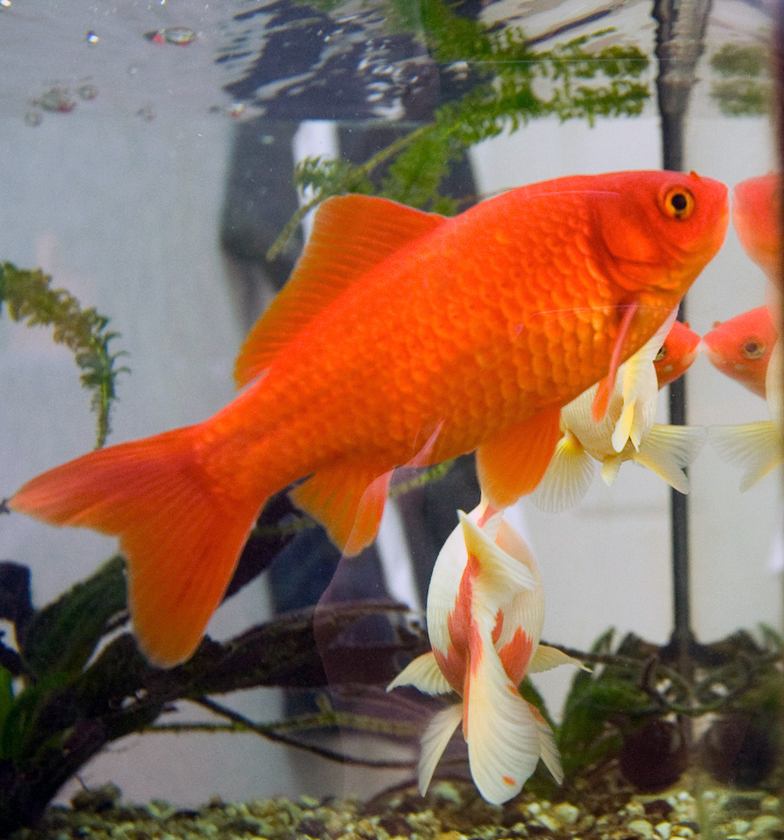
The goldfish is a robust and sociable cold-water cyprinid, one of the oldest domesticated fish. Contrary to popular belief, it reaches a large size and lives very long when properly housed. It is a group fish, greedy and curious.
Parameters
- Water type
- Freshwater
- Min volume
- 100 L
- Temperature
- 18–22 °C
- pH
- 6.5–8
- Hardness (GH)
- 5–25 °GH
- Adult size
- 25 cm
- Lifespan
- 15 years
- Diet
- Omnivore
- Temperament
- Paisible, sociable
- Difficulty
- Intermédiaire
Environment
It needs a large volume of cold water: allow 50 to 100 liters per fish, i.e. 100 liters minimum for a pair, and no heater. The ideal temperature is between 18 and 22°C, pH 6.5 to 8. Powerful filtration is essential as it produces a lot of waste; it uproots plants, prefer robust species or potted ones.
Feeding
Omnivorous, it accepts specific goldfish pellets, blanched vegetables (spinach, zucchini, peas) and frozen prey. Avoid overfeeding, common with this voracious species. Sinking foods limit air ingestion by round-bodied varieties.
Health & common diseases
The goldfish is susceptible to white spot disease (ichthyophthirius), fin rot, fungal infections and dropsy (swollen abdomen, raised scales). Symptoms to watch for include white spots on the body, frayed or torn fins, cottony patches, and lethargic behavior. Prevention involves clean water (regular 20-30% weekly changes), a varied diet without excess, sufficient volume (minimum 50L per fish), and good oxygenation to limit stress and pathogens.
Tips & tankmates
The fishbowl is to be absolutely avoided: too small, unfiltered, it condemns the animal to a brief and painful life. Do not associate it with tropical fish, as its cold water needs are incompatible. Cold-water companions such as other goldfish or hornwort suit it better.
Ask AquaBot
A question about Goldfish? The assistant answers from this care sheet.
I'm AquaBot, an AI: I can make mistakes. Double-check important information.
Information provided for guidance only; it may vary between individuals and conditions. If in doubt about an animal's health, consult a vet.