Malaysian Trumpet Snail
Melanoides tuberculata
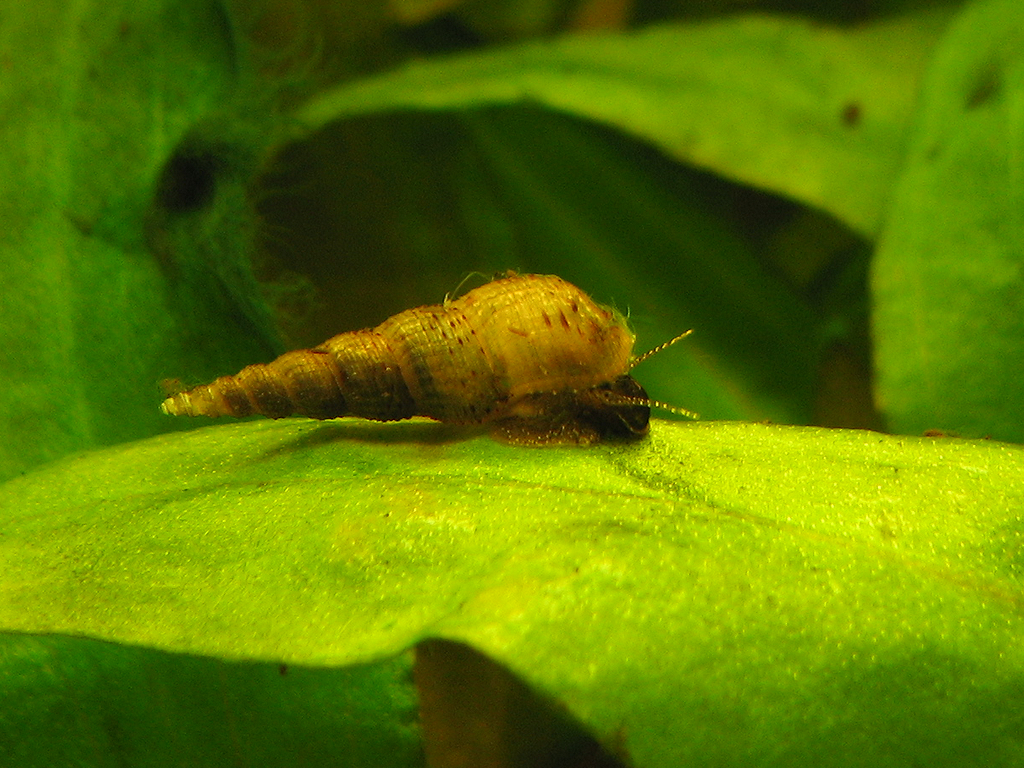
The Malaysian trumpet snail has an elongated conical shell and spends most of the day buried in the substrate. By burrowing, it aerates the soil and prevents the formation of harmful anaerobic pockets. Discreet and useful, it comes out mainly at night.
Parameters
- Water type
- Freshwater
- Min volume
- 10 L
- Temperature
- 18–28 °C
- pH
- 6.5–8
- Hardness (GH)
- 5–20 °GH
- Adult size
- 2.5 cm
- Lifespan
- 2 years
- Diet
- Détritivore
- Temperament
- Paisible
- Difficulty
- Débutant
Environment
Very tolerant, it withstands varied pH and hardness conditions, with a preference for neutral to slightly hard water. A loose substrate such as sand or fine gravel is essential for it to burrow. It is suitable for both planted aquariums and grow-out tanks.
Feeding
It recycles organic waste, leftover food and detritus buried in the soil. It does not touch live plants and makes do with whatever is lying around in the aquarium. No specific feeding is necessary in a maintained tank.
Health & common diseases
Malaysian trumpet snails are very hardy snails, rarely sick. They are sensitive to copper (found in certain medications and fertilizers), which is lethal to them even at low doses. Sudden mortality may indicate water pollution (ammonia, nitrites) or lack of oxygen in the substrate. Their excessive proliferation often signals overfeeding of the aquarium.
Tips & tankmates
Viviparous, it reproduces rapidly and its population reflects the amount of available food: a population explosion signals overfeeding. To control it, reduce feeding rather than using chemicals. It remains an excellent bioindicator of substrate cleanliness.
Sources
Ask AquaBot
A question about Malaysian Trumpet Snail? The assistant answers from this care sheet.
I'm AquaBot, an AI: I can make mistakes. Double-check important information.
Information provided for guidance only; it may vary between individuals and conditions. If in doubt about an animal's health, consult a vet.