Kuhli Loach
Pangio kuhlii
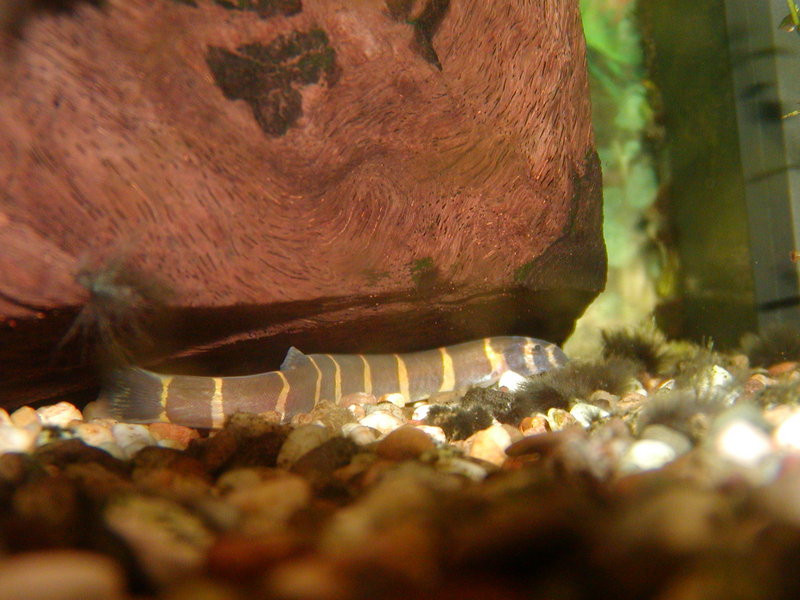
The kuhli loach (Pangio kuhlii) is a small bottom-dwelling fish with an elongated eel-like body, striped with dark bands. Nocturnal and gregarious, it remains mostly discreet during the day and digs through the substrate in search of food. It reaches approximately 10 cm when adult.
Parameters
- Water type
- Freshwater
- Min volume
- 80 L
- Temperature
- 24–28 °C
- pH
- 5.5–7
- Hardness (GH)
- 2–10 °GH
- Adult size
- 10 cm
- Lifespan
- 8 years
- Diet
- Omnivore
- Temperament
- Paisible
- Difficulty
- Intermédiaire
Environment
Provide an aquarium of at least 80 liters with a fine, soft substrate (sand) to protect its barbels, and numerous hiding places (driftwood, rocks, dense plants). Soft, slightly acidic to neutral water (pH 5.5 to 7.0) between 24 and 28 °C is suitable. A tight-fitting lid is essential as it can squeeze through the smallest openings.
Feeding
A bottom-dwelling omnivore, it enjoys sinking granules and pellets, as well as frozen or live prey (bloodworms, brine shrimp, daphnia). Feed preferably in the evening, when the lights go out, to respect its nocturnal rhythm. Ensure it receives its share against faster fish.
Health & common diseases
The Kuhli Loach is sensitive to parasitic diseases such as ichthyophthirius (white spot) and bacterial skin infections, especially in case of injuries related to unsuitable substrate (too sharp). Monitor for abdominal swelling, loss of appetite, and the appearance of spots or lesions on the skin. This scaleless species is particularly vulnerable to medications: always halve the doses and avoid products containing copper or formaldehyde in high concentrations. Maintain clean water (regular changes), fine sandy substrate, and varied diet to prevent health problems.
Tips & tankmates
Keep it in groups of at least five or six individuals: when isolated, it remains hidden and stressed. Avoid sharp substrates that injure its barbels and damage its poorly scaled skin. Handle it gently as it is fragile and sensitive to medications, especially those rich in heavy metals (copper).
Sources
Ask AquaBot
A question about Kuhli Loach? The assistant answers from this care sheet.
I'm AquaBot, an AI: I can make mistakes. Double-check important information.
Information provided for guidance only; it may vary between individuals and conditions. If in doubt about an animal's health, consult a vet.