Acute Bladder Snail
Physella acuta
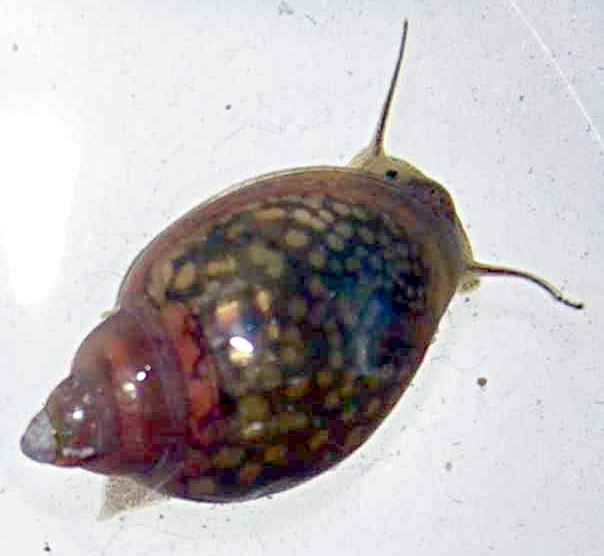
The acute bladder snail is a very common small freshwater snail, often introduced inadvertently with plants. Its thin, translucent shell is sinistral (it coils to the left). A tireless detritivore, it's an excellent cleaning assistant… that proliferates quickly if left unchecked.
Parameters
- Water type
- Freshwater
- Temperature
- 15–28 °C
- pH
- 6.5–8
- Hardness (GH)
- 5–25 °GH
- Adult size
- 1.5 cm
- Lifespan
- 1.5 years
- Diet
- Détritivore, omnivore
- Temperament
- Paisible, prolifique
- Difficulty
- Débutant
Environment
Extremely hardy, it tolerates a very wide range of parameters (pH 6.5 to 8, 15 to 28 °C, variable hardness) and adapts to all tank sizes. It breathes air from the surface and requires no special equipment. Found in almost all freshwater aquariums.
Feeding
Detritivore and opportunistic omnivore: leftover food, algae, biofilm, dead leaves and plant debris. It does not attack healthy plants, only dead or dying tissue. No need to feed it specifically.
Health & common diseases
Bladder snails are robust but sensitive to heavy metals (copper, zinc) present in certain medications and fertilizers, which can cause rapid death. A fragile, whitish or perforated shell often indicates calcium deficiency (insufficient GH hardness); compensate with hard water or calcium supplementation. Overpopulation and excessive organic waste promote parasitic infestations and poor water quality. Beware of antiparasitic treatments containing copper, always toxic to gastropods.
Tips & tankmates
Hermaphroditic, it reproduces very quickly: a population explodes especially with overfeeding. To control it, reduce food input rather than using chemicals. Sensitive to copper (beware of treatments). Often wrongly labeled as a 'pest,' it is actually useful for cleaning and waste recycling.
Sources
Ask AquaBot
A question about Acute Bladder Snail? The assistant answers from this care sheet.
I'm AquaBot, an AI: I can make mistakes. Double-check important information.
Information provided for guidance only; it may vary between individuals and conditions. If in doubt about an animal's health, consult a vet.